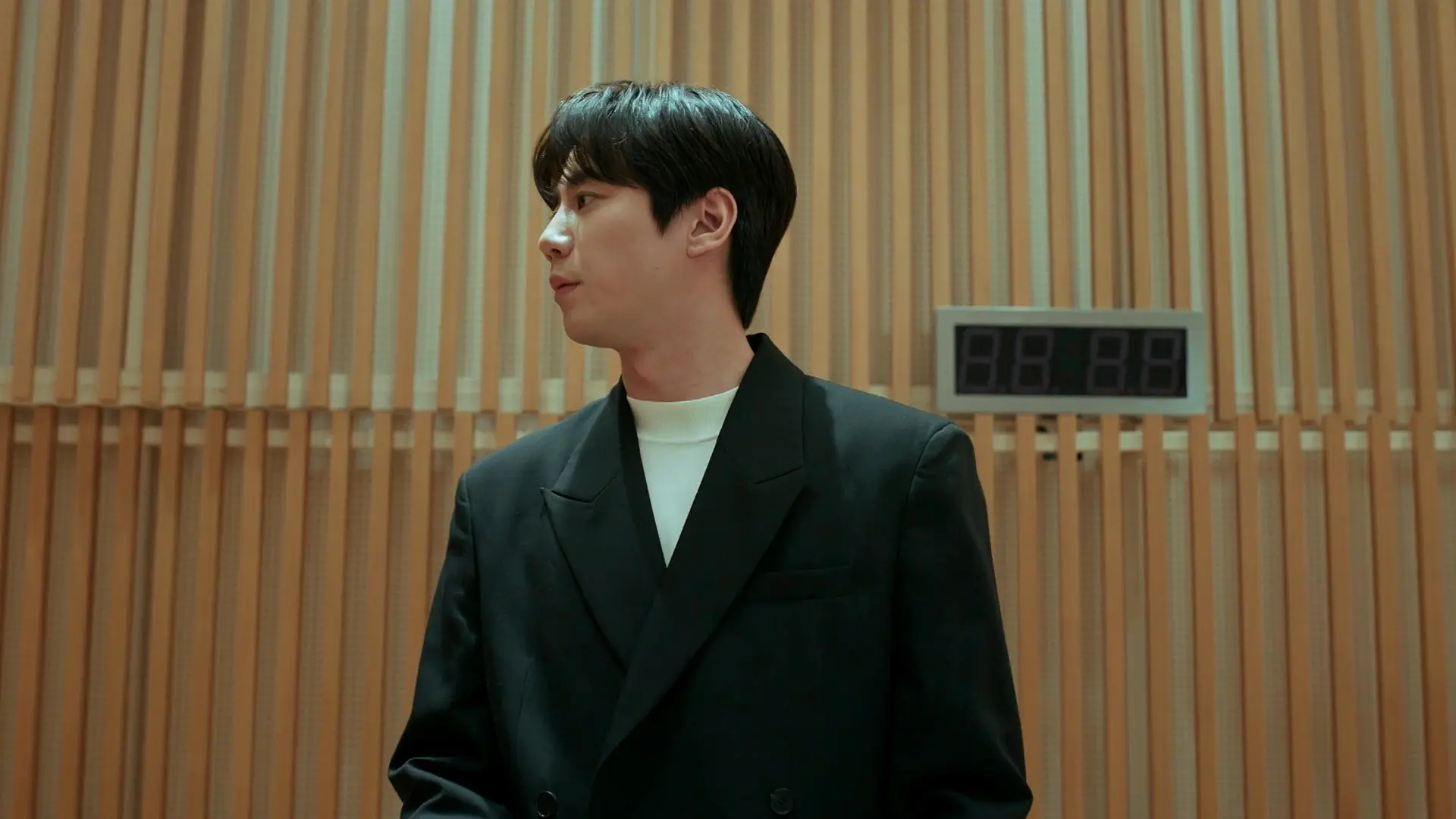
In Episode 8 of tvN’s weekend drama Four Hands, Two Sonatas, the tension inside the practice hall reaches a boiling point during the orchestra’s very first run-through. Conductor Choi Jeong-yo steps onto the podium as the newly appointed principal guest conductor, only to face quiet skepticism from musicians who doubt a 27-year-old maestro can handle a major program.
When baton meets downbeat, Jeong-yo does not argue with words—he speaks through the music. His sharp corrections to the cello section and pianist Kang Bi-o reveal the exacting mechanics of orchestral performance. To help viewers fully appreciate this pivotal scene, here is a clear guide to the key classical music terms featured in Episode 8 and what they reveal about the characters.
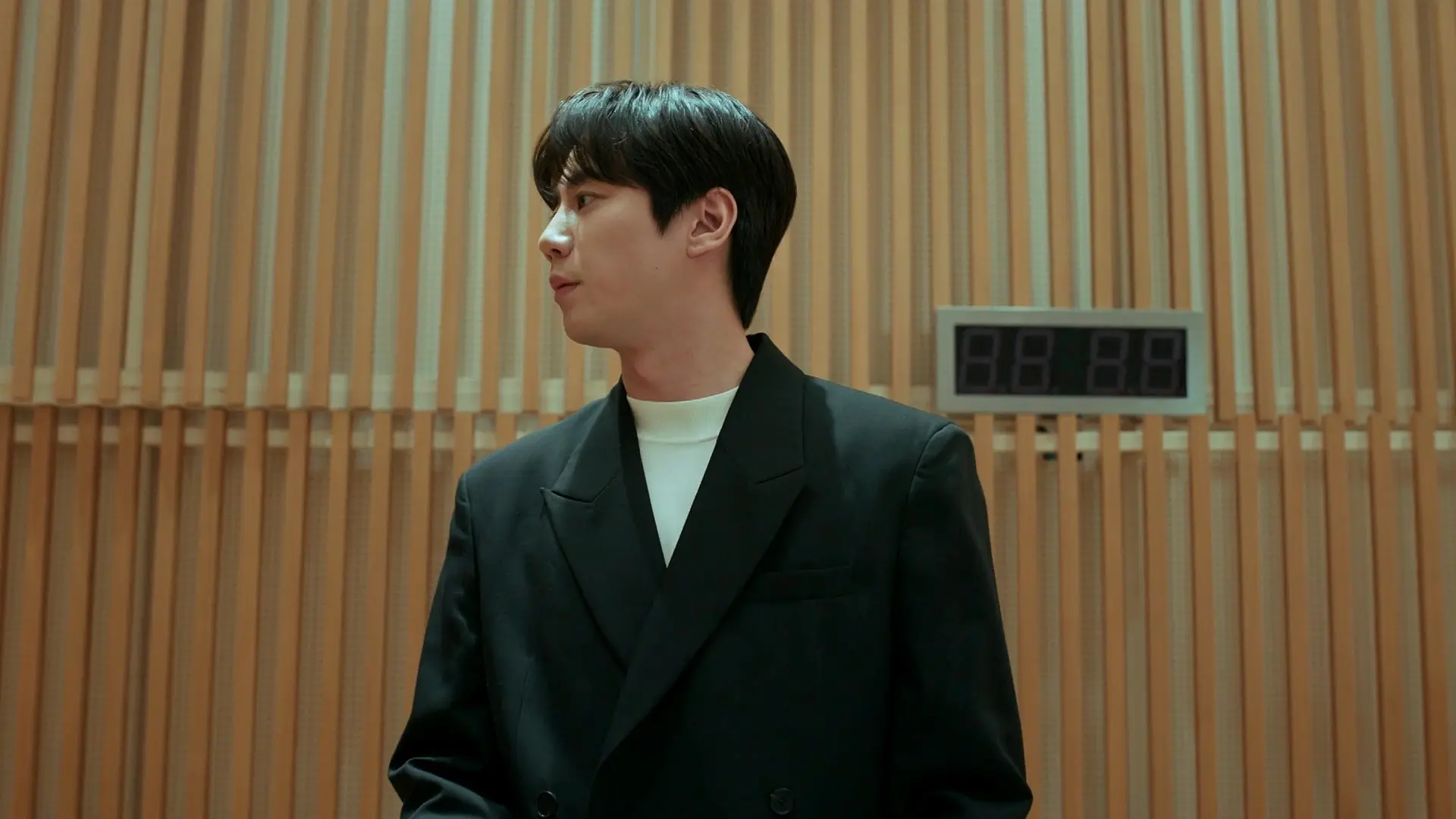
Key Orchestra Terms in the Episode 8 Rehearsal
The dialogue throughout the rehearsal scene weaves in professional orchestral vocabulary. Understanding these terms uncovers the subtle power struggle playing out between the musicians and their young conductor.
| Musical Term | Scene Timestamp | Meaning in Context |
|---|---|---|
| Bar (Measure) | 04:31 | The foundational rhythmic unit divided by vertical bar lines, used by musicians to pinpoint exact rehearsal spots |
| Half-Beat | 04:31 | A fraction of a single beat; in tight ensemble playing, even half a beat off can shatter rhythmic precision |
| Principal Guest Conductor | 05:07 | An invited outside conductor engaged for specific concert sets or seasonal programs, distinct from the permanent music director |
| First Movement | 05:57 | The opening independent section of an extended multi-movement work, setting the thematic foundation |
| Phrase | 49:52 | A musical sentence—a complete melodic breath that shapes emotional expression |
| Downbeat (First Beat) | 50:06 | The very first beat of a new measure that anchors the pulse and gives the orchestra its collective footing |
The “Half-Beat Early” Provocation and the Conductor’s Stand
Before the rehearsal starts, skepticism ripples through the orchestra ranks. Seok-hwan points to bar 11, says he will come in half a beat early, and adds:
“‘걔 절대 모른다’에 내 손가락 이거 전부 걸게.” “I bet all my fingers he won’t notice.”
In an orchestra of dozens of instruments playing at full tilt, rushing by half a beat might seem like a split-second slip. Yet to a trained ear, that tiny gap unravels the entire ensemble’s alignment. Seok-hwan’s challenge is deliberate: he wants to test whether this young conductor on the podium possesses the ear to isolate a microscopic error and the command to hold the room together.
Jeong-yo mounts the podium amidst the cold stares and hushed whispers. Instead of pleading for respect or pulling rank, he establishes an unwavering boundary:
“우리가 이 연습실에서 논쟁해야 하는 건 오로지 음악에 관한 것뿐입니다.” “The only thing we should argue about in this rehearsal room is the music.”
He makes it clear that credentials, age, and personal friction have no place in the hall—only the performance matters.
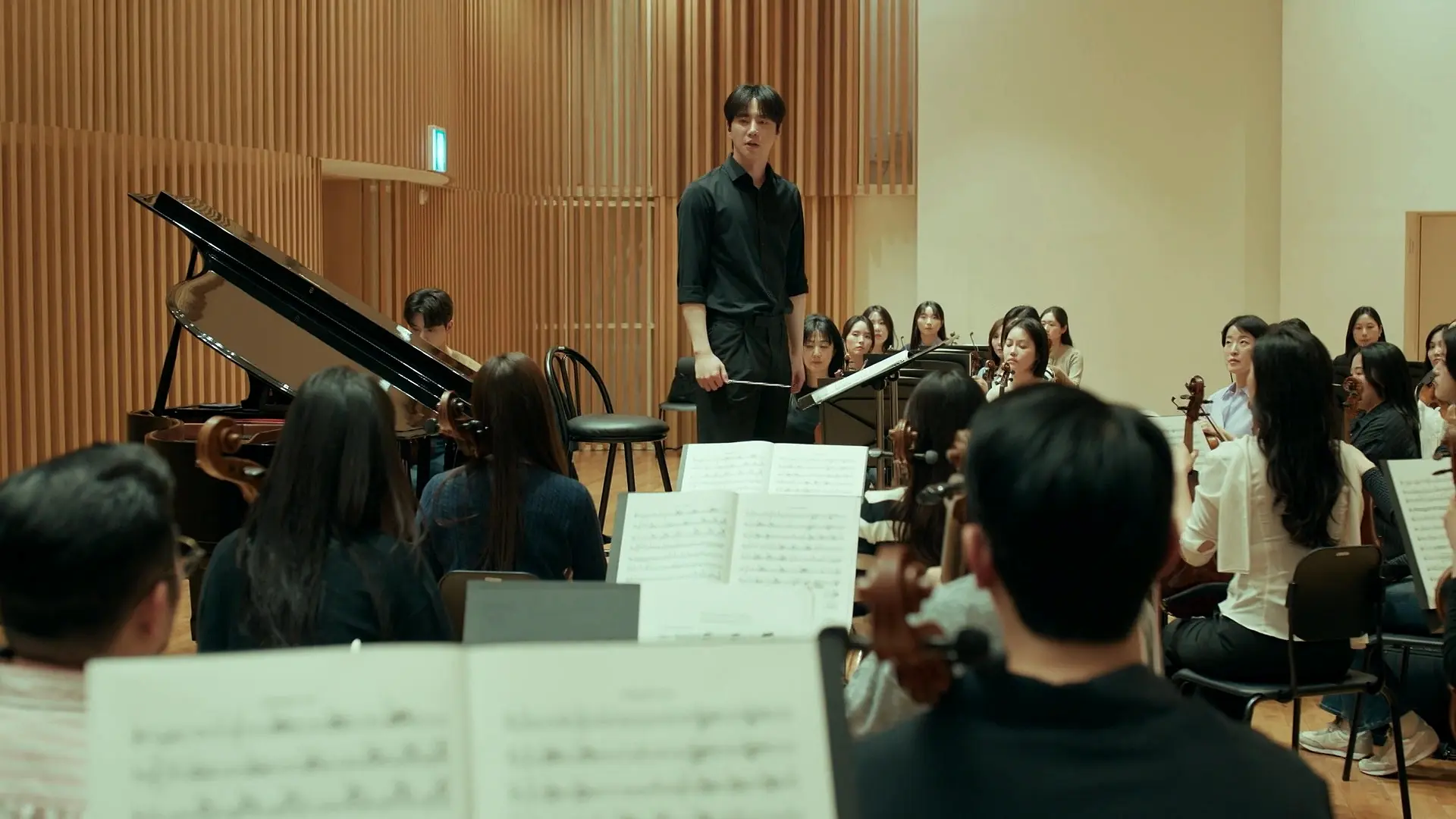
“Finish the Phrase” and “Stand the Downbeat”: The Art of Ensemble Precision
As the orchestra digs into the first movement of Brahms, Jeong-yo’s acute listening proves his critics wrong. He stops the ensemble and addresses the cellos without hesitation:
“첼로 조금 빠릅니다. 피아노 프레이즈 끝 음에 정확하게 맞춰 주세요.” “Cellos are slightly rushing. Match the exact ending note of the piano phrase.”
The cellos had pushed forward too eagerly, entering before the piano could finish the final note of its melodic sentence. Just as two people talking over each other garble a conversation, orchestral counterpoint collapses when accompanying strings cut off a solo phrase. The piano must complete its thought so the strings can seamlessly carry the musical line.
Turning straight to pianist Kang Bi-o, Jeong-yo demands equal discipline from the soloist:
“프레이즈 마감에서 다음 마디 첫 박은 정확하게 세워 주세요.” “At the close of the phrase, make sure to stand the downbeat of the next measure firmly.”
Soloists often pull tempo for emotional emphasis, but if the piano loses its rhythmic spine, the accompanying orchestra drifts into chaos. By telling Bi-o to “stand the downbeat,” Jeong-yo instructs him to plant the opening beat of each measure like a pillar, giving the entire orchestra a dependable foundation to lean on.
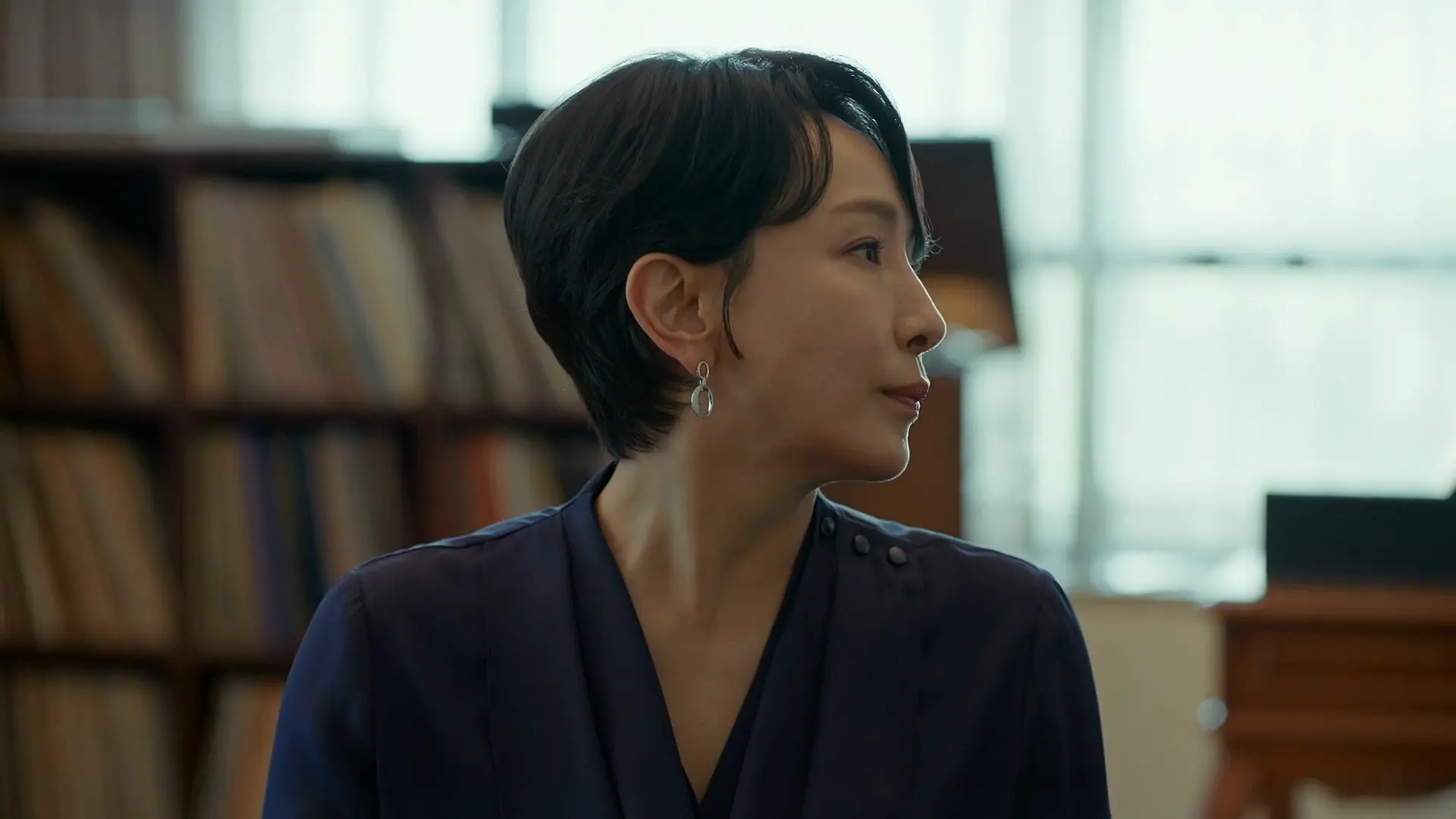
Why Mozart Piano Concerto No. 20 Matters for the Debut Program
Around the midpoint of Episode 8, the drama shifts from practice mechanics to repertoire strategy. With Brahms Symphony No. 1 already locked for the second half of the concert, Seung-woon proposes Mozart’s Piano Concerto No. 20 in D minor for the first half piano collaboration.
Seung-woon’s reasoning connects the technical program directly to the characters’ personal journeys:
“너희 둘 다 어둠에서 빛으로 나오게 된다는 서사적 측면에서 모차르트 피협 20번이랑 브람스 교향곡 1번으로 하면 일관성이 유지될 거 같은데.” “In terms of narrative—both of you stepping out of darkness into light—pairing Mozart Piano Concerto No. 20 with Brahms Symphony No. 1 keeps the consistency.”
Mozart’s 20th Concerto is famous for its brooding opening in D minor that journeys toward an uplifting resolution, mirroring the monumental transition from shadow to triumph in Brahms’s First Symphony. Rather than simply picking crowd-pleasers, the debut concert is designed as an artistic reflection of Jeong-yo and Bi-o’s struggle to overcome past trauma and step back into the light.
Episode 8 transforms an ordinary rehearsal into high drama by grounding character dynamics in authentic musical craftsmanship. For air dates, see our Four Hands, Two Sonatas episode schedule guide. To track how the drama performs on weekend television, check out the Four Hands, Two Sonatas ratings breakdown.